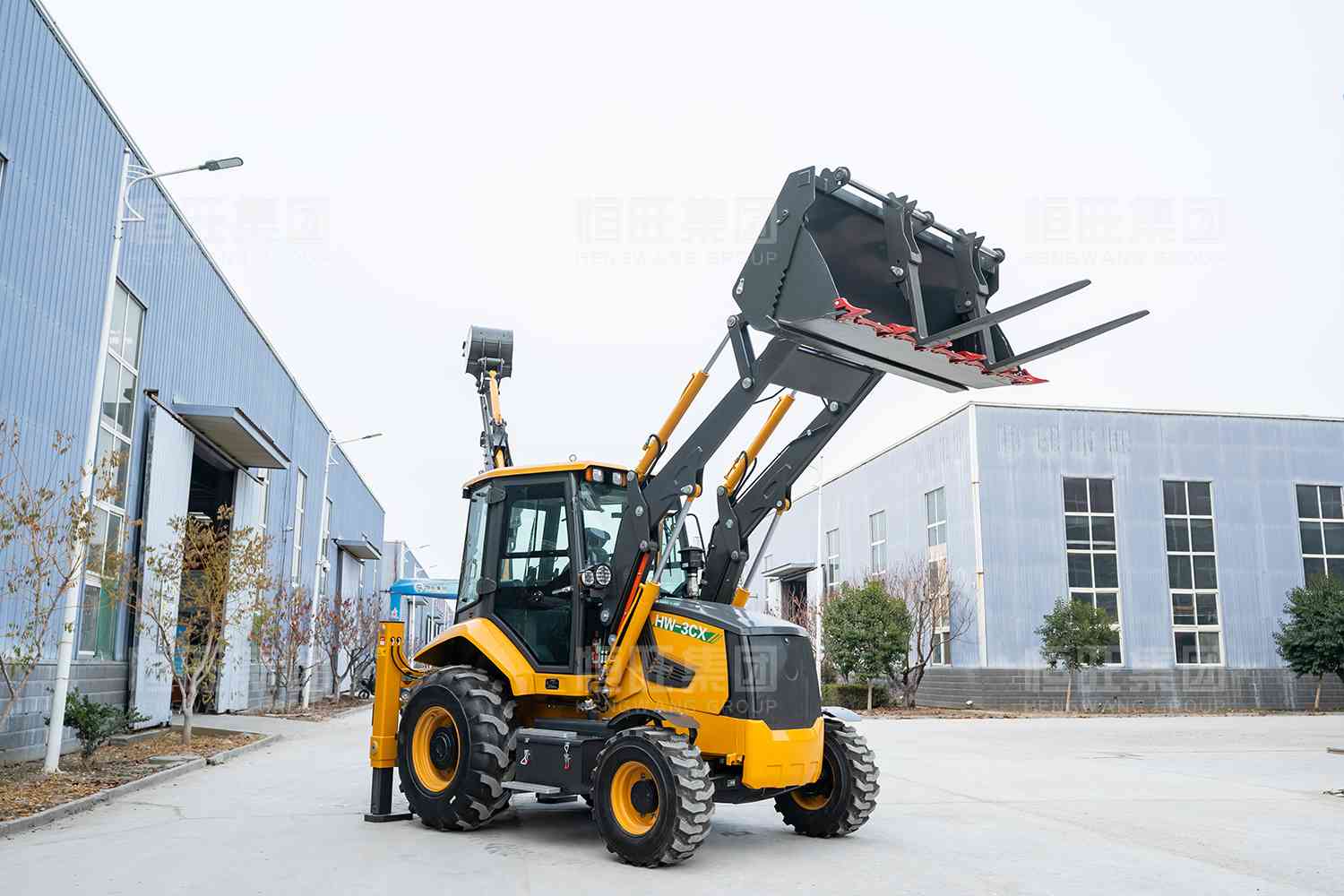
Gear slippage in backhoe loaders can cause abnormal engine speed or even stalling, severely impacting operational efficiency. Below are the core reasons for this issue, analyzed by mechanical principles and common fault points:
1. Excessive Wear in Transmission Mechanism
Backhoe loaders use a mechanical shift transmission, where gear engagement is achieved by sliding gear sleeves axially over fixed gears. Frequent shifting wears the tooth edges of meshing gears into a conical shape, reducing contact area and locking force. When subjected to sudden loads or vibrations, the axial force generated by the conical teeth pushes the gear sleeve out of engagement, causing slippage.
2. Loose Components in Transmission System
Manual shifting relies on precise linkage of the shift lever, longitudinal shaft, cross shaft, etc. If fixing screws loosen or clearances in linkages increase, shifting accuracy drops—after engaging a gear, the loose mechanism fails to hold the gear sleeve in place, leading to disengagement under load shock.
3. Failure of Self-Locking Mechanism
To prevent slippage, backhoe loaders feature a ball-spring self-locking device on the fork shafts of gears Ⅱ/Ⅲ, Ⅳ/Ⅴ, and reverse: the spring presses a steel ball into the positioning groove of the fork shaft to lock the gear. Issues include:
Conclusion
Backhoe loader gear slippage mainly stems from mechanical wear, loose connections, or safety mechanism failure. Routine maintenance should focus on inspecting gear meshing, shift lever fastenings, and self-locking spring tension, replacing worn parts promptly to avoid downtime losses.